Defining Your “Healthy Diet”
What does a healthy diet look like? It should help you achieve your weight, health, and wellness goals. Here are steps to defining what your healthy diet looks like.
- Identify your goals. Are you trying to lose weight? Are you trying to improve muscle mass? Are you trying to lower blood sugar? Your diet should help you achieve those goals.
- Identify your strategies. Will you use portion control? Which filling, nutritious, and enjoyable foods can you include? Can you use mindful eating to help guide you?
- Identify Foods to Emphasize and Limit. Look for nutrients like protein, healthy fat, fiber, vitamins, and minerals, and consider limiting high-calorie food and beverages, foods and beverages with added sugars, foods high in saturated fat, and fried foods.
Plate Method: A Simple Guide to Balanced Meals - and Grocery Shopping
The Plate Method can help guide balanced meals. Just fill your plate:
- ½ non-starchy vegetable
- ¼ lean protein like fish, eggs, chicken, beans, and tofu
- ¼ high-fiber carbohydrates like whole grains or starchy vegetables
Add water or another low-calorie drink like coffee or tea. Sometimes, add nutritious foods like fresh fruit, healthy fats like avocado, salad dressing, or cooking oil, and reduced-fat dairy like yogurt or cheese.
Benefits of the Plate Method include getting a balanced meal with fiber, protein, and other nutrients with:
- No precise measuring of food
- No counting calories or carbs
The Plate Method can also help with grocery shopping! Think about making your shopping cart look like your plate:
- Lots of non-starchy vegetables
- Lean proteins like fish, eggs, chicken, beans, and tofu
- Some high-fiber carbs like whole grains or starchy vegetables
Add anything else you need like fresh or frozen fruit, healthy fats, reduced-fat dairy products, and coffee or tea bags.
Good News: Food Packages Are Consistent
The FDA regulates food packaging, while the USDA regulates fresh meat and poultry. Under the Nutrition Labeling and Education Act (NLEA), food packages have certain types of information. The NLEA requires the product’s name, weight, list of ingredients, and nutrition facts. Health claims may be present if the product qualifies.
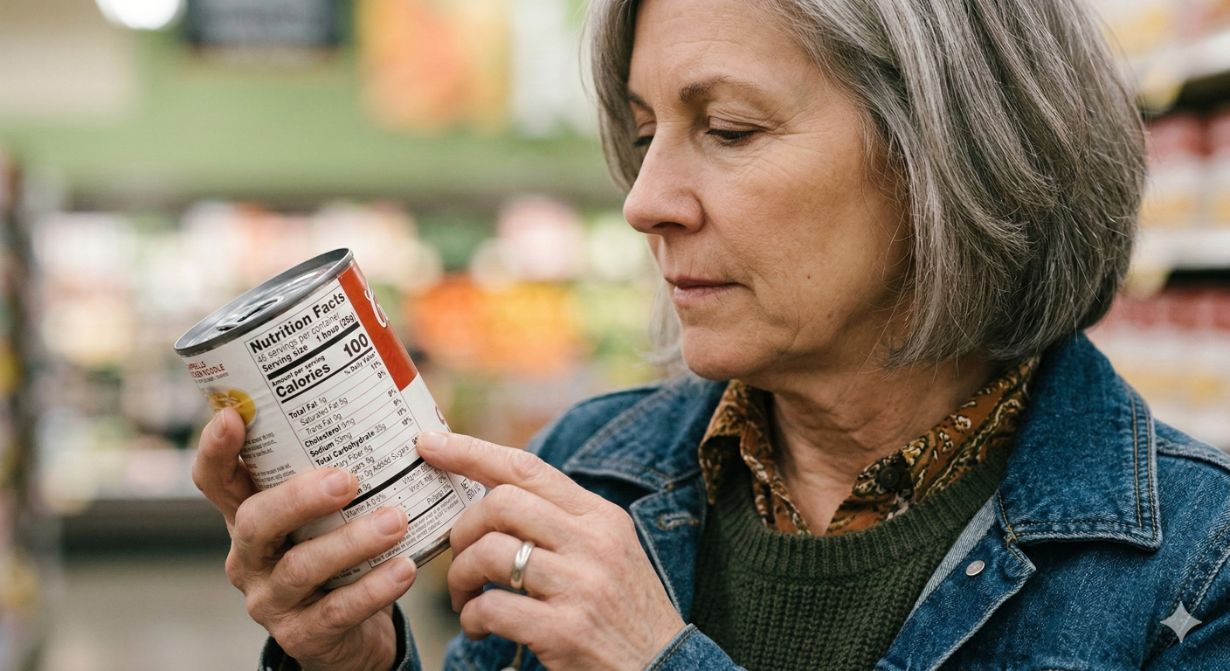
Nutrition Facts Panels: Serving Sizes
The serving size is listed as a quantity (such as “1 container,” “½ cup,” “2 pieces,” or “1 ounce,” for example). It’s also listed in terms of servings per container (e.g., “1 serving per container,” or “3 servings per container.”).
Nutrition facts panels list calories and nutrients per serving. If you eat or drink more than one serving, remember that the calories and nutrients you’re consuming are more than the amounts per serving listed on the nutrition facts panel.
Serving sizes on nutrition facts panels are one way to guide your choice of portion control. Here are some other pieces of information to guide portion sizes.
- Level of hunger
- Habit
- Fill up your plate
- Convenience of the package (e.g., bag of chips, package of nuts, bottle of soda)
Nutrition Facts Panels: Calories and Key Nutrients
Nutrition facts panels list calories per serving just under (or after) serving size information.
Carbohydrates come after fat, cholesterol, and sodium. The nutrition facts panel includes total carbohydrates, fiber, and total and added sugars per serving. This information is in grams and in present daily value (%DV). Many people might aim to have 2-4 servings of total carbohydrates (30-60 grams) at a meal, or 0-2 servings (0-30 grams) at a snack.
Many people might aim for about 15-25 grams of protein per meal, or about 10-15 grams per snack. Your body can only use about 30 grams of protein at one time for protein-specific purposes (e.g., building muscle or repairing tissues). Excess protein is a source of energy for your body, and amounts above what you need for energy are stored as fat.
The nutrition facts panel shows important nutrients to limit. These are nutrients that many Americans could benefit from eating less of due to their links with chronic conditions. Here are examples.
- Saturated fat: heart disease, weight gain, certain cancers
- Sodium: hypertension
- Added sugars: weight gain, type 2 diabetes
As a general guideline, you might aim to choose foods with less than 5% DV of these nutrients to limit.
The nutrition facts panel also shows important nutrients to increase. These are nutrients that many Americans could benefit from eating more of to prevent deficiencies or for weight management or health benefits. Here are examples.
- Dietary fiber: cardiovascular disease, digestive health, blood sugar control, weight management
- Calcium: bone health, heart health
- Vitamin D: bone health, immune health, cardiovascular health
- Iron: cardiovascular health, prevention of anemia
- Potassium: heart health, diet quality indicator (it’s in nutritious foods like fruits, vegetables, beans, fish, and yogurt)
As a general guideline, you might aim to have foods with at least 10-20% DV of these nutrients to limit.
Nutrition Facts Panels as a Tool for Comparing Products
Another helpful use of nutrition facts panels is to compare products so you can choose the best one for your goals. For example, you might compare the labels of two different breakfast cereals and see that one is higher in fiber and protein, and lower in sugar and sodium, than the other.
List of Ingredients: Another Tool for Choosing Foods
The list of ingredients on food packages lists the ingredients in order from most to least, by weight, in the product. So, the ingredient listed first is the most abundant ingredient in the product.
Here are some examples of what you might consider when looking at the list of ingredients.
- How many times is sugar listed? Are there many types of sugar, like corn syrup, maltodextrin, brown sugar, rice syrup, and glucose, all in the same product?
- Is there a whole grain (like “whole wheat flour) listed before refined grains (like “enriched wheat flour)?
- Are there preservatives, fillers, additives, emulsifiers, flavor enhancers, thickeners, artificial flavors, artificial colors, and more ingredients that you may prefer not to consume?
Help! There’s No Label!
That’s okay! You can still make a good choice! Here are some options.
- Follow your gut. Your intuition might lead you in the right direction. If you’re purchasing foods without labels, you might naturally choose fruits, vegetables, bulk whole grains and nuts, and fish, and be less likely to consider sweetened dried fruit, candy, fatty steaks, and bacon as the best options.
- Remember balance. Think back to a healthy plate with the Plate Method. Which foods fit onto it? Look for produce, lean proteins, and whole grains.
- Check online at a trusted site. Lots of resources are available these days. Find a trusted site, and use it!
Remember…One Step at a Time!
Reading labels can be overwhelming unless you take it slowly. Try to choose 1-2 things to focus on at first, such as serving size and calories or carbohydrates. Once you’re comfortable with those, add in more nutrients or ingredients to look at.