Muscles for Everyone: Your Power Tool for Weight Loss, Blood Sugar, and Longevity

May 20, 2026
Summary
Webinar Q&A

View the Webinar Recording

Summary

Fueling Workouts: In This Webinar…

  • What is resistance training? 
  • Muscle-strengthening recommendations
  • Muscles, metabolism, and health: benefits of strength training
  • Designing your muscle-strengthening plan

Please remember: 

The information in this presentation is general information. It is not intended to include specific instructions for individuals. Please ask your healthcare provider for personalized guidance!

If you have heart, metabolic, or kidney disease or are over 45 years old and have 2 or more risk factors (immediate family member with heart disease before age 55, cigarette smoking, high blood pressure, abnormal cholesterol levels, diabetes, sedentary lifestyle, or obesity)

What Is Strength Training?

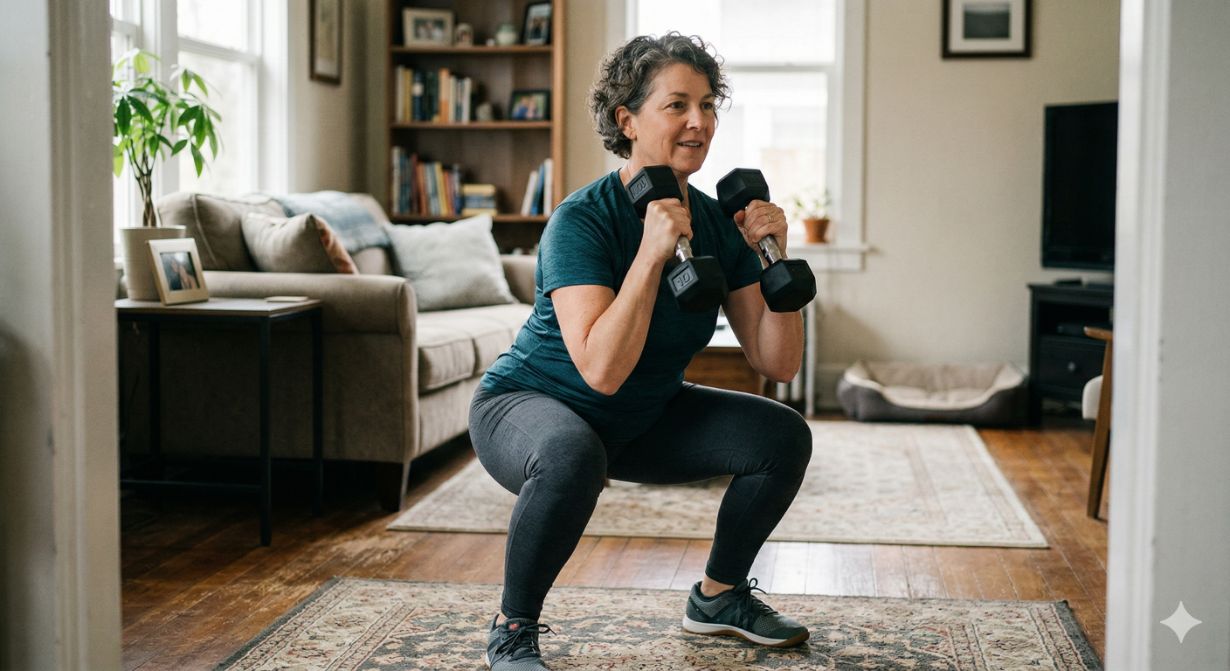
Strength training is also known as muscle-strengthening activity/exercise or weight training. It’s a form of exercise that uses resistance to make your muscles work harder than they do in daily life. This resistance causes micro-tears in the muscle, which heal and grow back stronger.

Recommendations for strength training or muscle strengthening exercise are in addition to recommendations for aerobic exercise. 

  • Aerobic exercise: at least 150 minutes per week of at least moderate intensity. Anything that gets your heart pumping faster counts.
  • Muscle-strengthening exercises: at least 2 days per week on non-consecutive days. Choose activities that make your muscles work harder than usual

Remember that if that’s more than you can do right now, do what you can. Even 5 minutes of physical activity has real health benefits.

Percent Meeting Physical Activity Guidelines

Activity Guideline Status Percentage of Adults Meeting Guidelines
Aerobic Only 47%
Strength Only 28%
Both Aerobic and Strength 24%

Benefits of Resistance Training

Resistance Training and Diabetes Risk

Resistance training helps lower risk of diabetes. In one study, each 60 minutes per week of muscle-strengthening exercise was linked to a 13% lower risk of type 2 diabetes. These are reasons why muscle-strengthening exercise can support blood sugar.

  • Improves body composition with more muscle mass - raising metabolism and fat loss
  • Increases glucose uptake by muscle cells even without insulin - reducing the need for insulin
  • Increases insulin sensitivity - leading to lower blood sugar

Muscle Mass Decreases with Aging and Weight Loss

Skeletal muscle tissue—being the first site for glucose and triglycerides disposal—decreases by 3–8% every decade after the age of 30. Muscle power and performance decline. Resistance exercise can help slow the rate of muscle loss. It can also help delay the onset of disability. 

For anti-sarcopenia (to preserve muscle mass):

  • Personalized instruction and supervision
  • Strength-based resistance 
  • Free weights (dumbbells, kettlebells), elastic bands or unstable tools (Bosu, balls)

Muscle mass also decreases with weight loss. Typically, weight lost during weight loss is 25% muscle and 75% fat. Here are ways to try to shift that ratio to lose more fat compared to muscle. 

  • Strength training
  • Consuming enough protein
  • Losing weight at a slower rate
  • Engaging in regular aerobic activity

Designing a Muscle-Strengthening Plan

Here are considerations for a resistance training plan. 

Health Category Resistance Training Benefits
Skeletal & Joint Health (MSK)
  • Improves bone mineral density and bone strength
  • Alleviates joint pain and manages arthritis symptoms
  • Enhances flexibility, mobility, and range of motion
Muscular & Neuromuscular
  • Increases muscle mass and muscle strength
  • Optimizes neuromuscular function
  • Improves balance and coordination
Metabolic & Blood Sugar
  • Lowers blood glucose levels
  • Enhances insulin sensitivity
  • Aids in the prevention and management of Type 2 diabetes
Consideration Guidelines & Key Concepts
Frequency
  • Aim for 2-3 times per week
  • Target each major muscle group
  • Schedule workouts on non-consecutive days to allow for recovery
Intensity
  • Refers to how heavy the resistance (weight) is
  • The chosen resistance should ensure that the target muscle groups tire by the end of the set
Sets and Reps
  • Standard goal is 8-12 "reps" per set, for 2-3 sets total
  • Shoulders
  • Arms
  • Legs
  • Chest
  • Back
  • Hips
  • Core
  • Here’s a sample workout that includes 2 sets each of several different muscle groups.

    ✅ Warm-up (e.g., walk/bike)

    ✅ Set 1, bicep curls (8-12 reps)

    ✅ Set 1, chest fly (8-12)

    ✅ Set 1, tricep kickbacks (8-12)

    ✅ Set 1, squats (8-12)

    ✅ Set 1, plank (60 seconds)

    ✅ Set 1, seated row (8-12 reps)

    ✅ Set 1, shoulder press (8-12)

    ✅ Set 2, bicep curls (8-12 reps)

    ✅ Set 2, chest fly (8-12)

    ✅ Set 2, tricep kickbacks (8-12)

    ✅ Set 2, squats (8-12)

    ✅ Set 2, plank (60 seconds)

    ✅ Set 2, seated row (8-12 reps)

    ✅ Set 2, shoulder press (8-12)

    ✅ Cool-down (e.g., walk/bike)

    Checklist for A Strength Training Plan 

    ✅ Warm-up, cool-down for each session

    ✅ 2 sets of 8-12 reps per exercise/muscle focus 

    ✅ Good form (get help!)

    ✅ Slow contraction, slow release (2 counts each)

    ✅ “Rest” between sets of same muscle groups (active recovery, working another muscle group, or rest)

    ✅ Working each major muscle group twice in the week

    Experts to Consider Asking

    Ask a qualified person to help you choose exercises and perform them with correct form. Here are some possibilities. 

    • Physical therapist
    • Personal trainer or small group trainer
    • Group exercise class
    • Qualified gym staff

    Check credentials - don’t assume!

    Remember to ask which exercises to do, how often to do them, and whether they can provide any additional information.

    Helpful Resources For Choosing Exercises and Learning Correct Exercise Technique 

    Type Examples Facts
    Free weights Dumbbells, kettlebells, barbells, household objects Wide range of possibilities, recruit more muscle
    Bands, unstable Resistance bands, Bosu, stability ball, balance disks Portable, affordable, variable resistance
    Weight machines Leg press, hamstring curl, lat pulldown, shoulder press Target specific muscles, good for beginners
    Resource & Link Description
    The ONE Group (Oncology – Nutrition – Exercise) View Exercise Videos → Offers user-friendly exercise videos and clear descriptions demonstrating correct form. Programs require no special equipment and feature a variety of resistance types.
    American Council on Exercise (ACE) Browse ACE Library → A comprehensive exercise library that allows users to search for movements by specific body part, type of resistance, and level of difficulty to ensure safe progression.
    National Academy of Sports Medicine (NASM) Browse NASM Library → An expert-curated exercise library providing broken-down movement tutorials and videos to help individuals understand and maintain proper technique.

    Ask your provider which resources are appropriate for you

    Compound (Multi-Joint) Exercises Burn More Calories

    Here are some examples. 

    Upper Body Core Lower Body
    • Push-ups
    • Pull-ups
    • Shoulder Press
    • Planks
    • Superman
    • Bird Dog
    • Squats
    • Lunges
    • Deadlifts

    Track Your Progress

    Here’s an example.

    Exercise Sets Weight Target Reps Rest Notes
    Squats 2 45-lb barbell 15 1 minute Set 1: 20 reps, Set 2: 18 reps
    Push-ups 2 Body weight on an incline Work for 30 seconds 1 minute Set 1: 12 reps, Set 2: 10 reps
    Walking lunges 2 15-lb dumbbell Lunging for 50 ft 1 minute 50 feet per set
    Inverted row 2 Body at a 45° angle 15 1 minute Set 1: 15 reps, Set 2: 14 reps

    Lark Can Help!

    If you have a Fitbit: sync it with Lark

    • Give the Lark app permission to access Google Fit or Apple Healthkit if you use other devices (like an Apple watch)
    • Answer any questions from Lark about moderate-to-vigorous exercise minutes
    • Enter your workouts manually in the app

    After this webinar…

    • Motivation! - Identify why you want to strength train
    • Identify when and where you can strength train, and what equipment you can use
    • Ask for help finding exercises and learning proper form

    References

    U.S. Department of Health and Human Services 

    Physical Activity Guidelines for Americans, 2nd Edition

    Moore SC, Patel AV, Matthews CE, Berrington de Gonzalez A, Park Y, Katki HA, Linet MS, Weiderpass E, Visvanathan K, Helzlsouer KJ, Thun M, Gapstur SM, Hartge P, Lee IM. Leisure time physical activity of moderate to vigorous intensity and mortality: a large pooled cohort analysis. PLoS Med. 2012;9(11):e1001335. doi: 10.1371/journal.pmed.1001335. Epub 2012 Nov 6. PMID: 23139642; PMCID: PMC3491006.

    Majid et al., 2021

    Grøntved et al., 2012

    Cannataro R, Cione E, Bonilla DA, Cerullo G, Angelini F and D'Antona G (2022) Strength training in elderly: An useful tool against sarcopenia. Front. Sports Act. Living 4:950949. doi: 10.3389/fspor.2022.950949

    D’Antona Sports Act. Living 4:950949.

    Hemsfield Obes Rev. 2014 Jan 22;15(4):310–321

    Hunter GR, Byrne NM, Sirikul B, Fernández JR, Zuckerman PA, Darnell BE, Gower BA. Resistance training conserves fat‐free mass and resting energy expenditure following weight loss. Obesity. 2008 May;16(5):1045-51.

    Health Coach Q & A

    What links should I know about? 

    Lark is here to help!

    Lark Customer Support!

    https://support.lark.com/hc/en-us/requests/new

    Fiber Worksheet

    https://www.lark.com/resources/lark-worksheet-get-more-fiber

    Facebook page for DPP

    https://www.facebook.com/groups/larkdpp

    Lark blog

    https://www.lark.com/blog

    Lark recipes

    https://www.lark.com/resource-type/recipe

    Email a Lark coach with questions or to make an appointment

    coaching@lark.com

    https://app.acuityscheduling.com/schedule.php?owner=21319234

    Is doing the elliptical equipment at the gym considered strength training or aerobic or both?

    The elliptical is mostly aerobic (cardio). It is great for your heart and lungs! While your legs push against some resistance, it does not build muscle the way true strength training does.

    Are these guidelines age specific?

    The main guideline of strength training major muscle groups at least 2 days a week on non-consecutive days is for adults of all ages. For older adults, additional guidelines are to add a special focus on exercises that help with balance to help prevent falls and injuries. 

    What about Zumba with 2 lb dumbells?

    Zumba can be a great aerobic (cardiovascular) workout if it gets your heart rate up and increases your breathing rate. Adding dumbbells can help make it a muscle-strengthening workout - but it depends on what exercises you do and how fatigued your muscles get. Muscle-strengthening exercises are to get muscles tired.

    What about yoga and hot yoga?

    Yoga can be good for flexibility and balance. Many of the positions in yoga also require holding your own body weight (“body weight” or “functional” exercises), which can strengthen some muscles. 

    However, yoga on its own may not achieve the guidelines for muscle-strengthening. It may miss certain muscle groups. 

    Hot yoga can cause your blood sugar and blood pressure to change quickly due to the extreme heat.  Be sure to always talk to your doctor before trying hot yoga, especially if you have high blood sugar or heart conditions.

    How about standing on a total body vibration machine?

    Some people may stand on a vibrating platform to improve balance and possibly bone density, but it does not replace strength training. It does not make your muscles contract against a heavy load or force.

    Is taking creatine while strength training good to help improve insulin sensitivity and manage blood pressure?

    Creatine is a popular supplement for athletes. It’s a type of protein that people take to increase muscle mass and improve performance. Some studies show it might help muscles take in blood sugar, but the results are mixed. Creatine does not directly lower blood pressure. It hasn’t been shown to have major benefits for casual exercisers.

    Here's more information about creatine if you would like: 

    It can have side effects. Like all supplements, it’s best to talk to your doctor before taking creatine. 

    What about power or muscle drinks. do they work for the muscle.

    “Power” or "muscle drinks" are usually just protein shakes. Protein is an essential nutrient for many things in your body. It’s also necessary for building and maintaining muscle mass. Most people can get enough protein in their diets without supplements like protein shakes. 

    If you are not getting enough protein from your regular food (like chicken, fish, beans, reduced-fat dairy products, and eggs), protein shakes can help. But “extra” protein doesn’t lead to “extra” benefits or increased muscle mass or strength. 

    No matter how much protein you consume, it’s also important to do strength training (resistance training) to build and maintain muscle mass and strength. Protein itself won’t make you stronger. 

    Would getting a weighted vest to wear while walking help?I have had surgery  on both my shoulder and my knees so I do what I can do. but not try to overdo it at all

    The theory behind using a weighted vest is that it makes your body work harder when you walk. This can help with bone density. 

    However, a weighted vest does not replace many forms of strength training. That’s because it doesn’t target specific muscle groups. It may not hit all major muscle groups.

    In addition, a weighted vest can put you at high risk for injury because of the extra stress on your body. This can be especially risky after shoulder and knee surgeries because those areas may be weaker and at higher risk for injury. 

    Warning: Please check with your physical therapist or doctor before using a weighted vest to ensure it is safe for your knees and shoulders - and the rest of your body.

    I live in a two story house with a basement.  How many times going up and down the stairs would you recommend and does that help with strength training in your legs?

    Going up stairs can be fantastic for building strength in your thighs and glutes! It can also help break up sedentary time if you use the stairs regularly throughout the day.

    Because everyone's fitness level is different, there is no set number of times to recommend. If you’re already doing those stairs comfortably in your day, start by adding just 1 or 2 extra trips up the stairs a day and see how your knees feel. If you have any knee or other pain, or any other concerns, ask your healthcare provider. 

    Any tips for reversing/decreasing bone loss with exercise?  What types of exercise are recommended and/or discouraged?

    "Weight-bearing" exercises are the standard types of exercises for supporting bone health during aging. These are exercises where you are holding up your own weight and pushing it against the ground - like walking and jogging. 

    Strength training is another type of weight-bearing exercise. These types of exercises work by pulling on your bone - which is a type of stress. Just like when you stress or work your muscles and they grow stronger, putting light stress on your bones (like weight-bearing exercises) tells them to grow stronger. 

    The most common restriction is for people who have low bone mineral density (osteoporosis). It’s important to avoid exercises that make you round your back completely forward or twist your spine too hard, as this can cause injury. 

    It’s also important to ask your healthcare provider about any other restrictions due to osteoporosis or any other conditions you may have. 

    Yes, I too also sat for my job for 30 years, and am trying to start water aerobics as soon as my surgical sites heal.  I have a hard time with stairs after a crushed left knee,  and hard time with core exercises due to chronic herniated disc causing numbness in my right foot and a few toes.  What other exercises are safe to not injure these areas?

    Water aerobics can be a great option once you heal, since it’s a low-impact, non weight-bearing activity that doesn’t stress the joints much.

    For home exercises, seated movements can provide strength-training benefits. Resistance bands, dumbbells or home weights, and body weight exercises are all possible from a chair.

    Please ask your healthcare provider for exercises that are recommended and not recommended for your specific situation. There may be tips to avoid aggravating your back and knee, for example. 

    Walking while wearing a weight vest and or leg / arm weights. If I were to do that every other day, is that too much? Also, does that count as weight resistance?

    It’s important to ask your healthcare provider if wearing a weight vest and/or using arm/leg weights is a safe idea for you. That type of exercise can raise injury risk.

    If you do use them, they may be a slightly higher intensity cardiovascular workout, but they may not count much towards your muscle-strengthening recommendations. For more benefits, it may be more effective to do walking without weights, and then spend a few minutes doing some strength training exercises. 

    If you do choose to wear a weighted vest or use leg/arm weights, it’s important to start with only a few minutes, and not very often. Otherwise, injury risk is higher.

    I have cardiomyopathy and good exercises for strength training without heavy lifting.

    When you have cardiomyopathy (a heart muscle condition), the goal is to keep your muscles moving without straining or holding your breath. Options for many patients with cardiomyopathy are using light resistance bands or doing light bodyweight movements (like raising up on your toes or gentle arm movements).

    However, it’s critical to talk to your cardiologist or other professional before starting. Heavy lifting or straining can put dangerous pressure on your heart with cardiomyopathy. Always get a specific "okay" for each exercise you’re planning to do, and get and a list of safe heart-rate limits from your cardiologist before starting.

    Are abs and low back, considered upper or lower body ?

    They’re actually in the “core” - one of the 7 major muscle groups that the Physical Activity Guidelines for Americans suggest working at least 2 times per week. The core is like the trunk of a tree - it holds you up and keeps you stable. 
    OUR next live webinar

    Summer-Proof Your Progress: Ways to Keep Up Your Healthy Momentum This Season

    June 3, 2026 6:15 PM
    Members of Lark's Diabetes Prevention Program can check your emails for registration information! Not a member? See if you're eligible for live webinar access and more.