One research study looked at 16 subjects with diabetes. They ate one of three meals.
Meal 1: Carbohydrates first (bread and orange juice, then protein and vegetables 10 minutes later)
Meal 2: Carbohydrates last (protein and vegetables, then bread and orange juice 10 minutes later)
Meal 3: All foods at the same time.
All of the meals had 574 calories, 55 grams protein, 10 grams fat, and 64 grams carbohydrates.
Researchers measured blood glucose, insulin, and GLP-1 levels over the next three hours after eating the meal. When they ate vegetables and protein first,
Blood glucose was LOWER
Insulin levels were LOWER
GLP-1 levels were HIGHER
Multiple research studies show that benefits of eating carbohydrates last or fiber/vegetables first include:
Linked to lower body weight - higher volume, fewer calories, increased GLP-1 levels (especially from eating soluble fiber)
Linked to fewer diabetes complications - lower blood sugar and insulin levels
Increase fiber consumption - eat high-fiber foods first. The average American gets less than half of recommended amounts.
Improved nutrient consumption - consume protein, vitamins, and minerals first
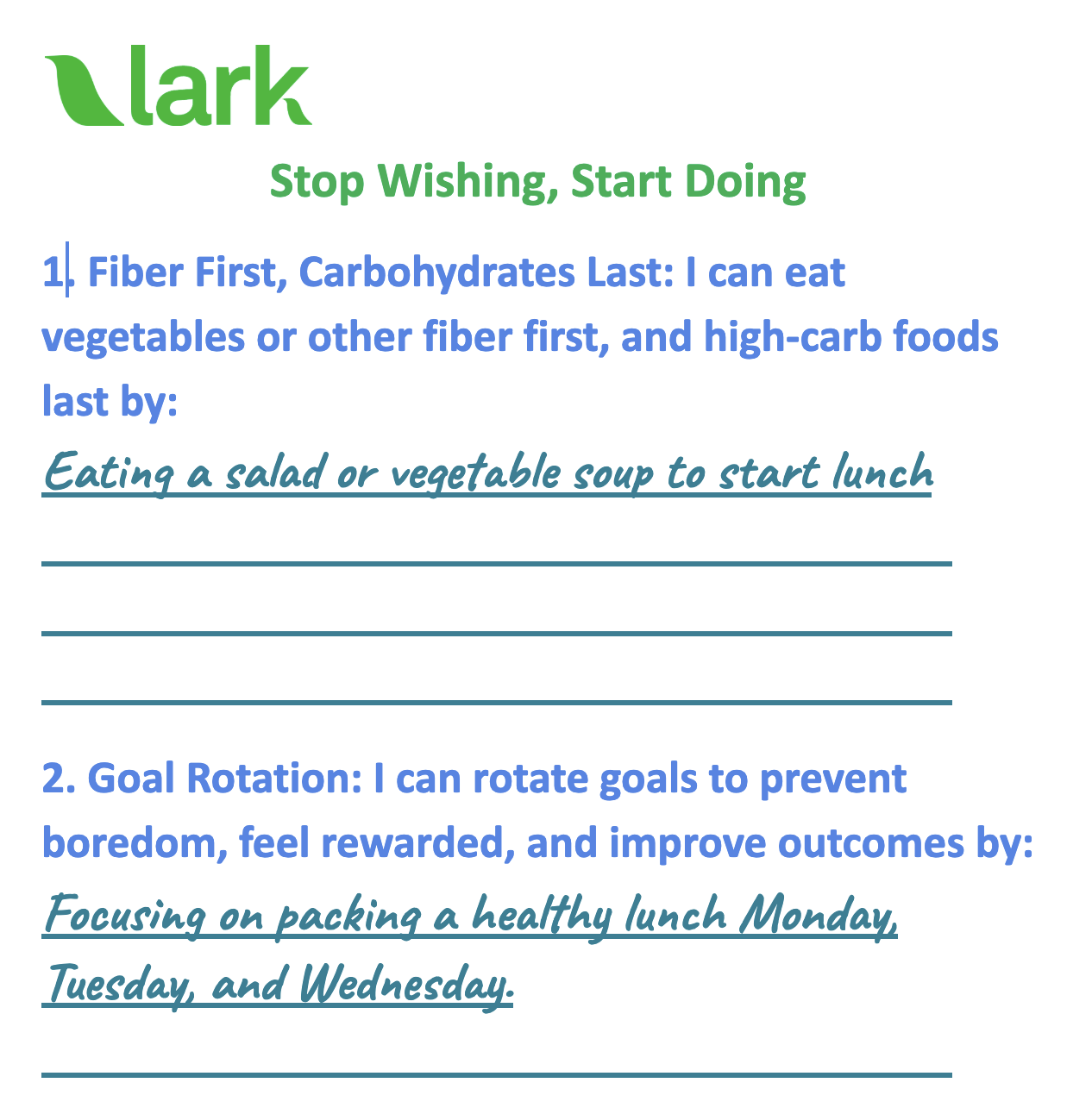
Write it down: How can you eat vegetables or other fiber first, and high-carb foods last?
I can pack baby carrots or celery sticks in my lunch and eat those first.
I can eat vegetables first in mixed dishes (e.g., stir fry, fajitas, eggs with vegetables)
I can ask the server to bring my “side” salad before the main course comes, or eat the side salad or roasted vegetables before the other items on my plate.
I will eat the filling out of sandwiches before eating the bread and spread.
I can start dinner with a bowl of vegetable soup that I make on the weekend.
Hack 2 - Rotate Goals to Increase Variety
Research says…
“Perceived variety” is a strong predictor of long-term adherence to an exercise program.
Researchers found people quit by 6 weeks due to Sensory Boredom
Why it works
Prevent boredom
Stay motivated
Improved outcomes through more variety and learning - more strategies for success
More fitness, prevent injuries through cross training and strength training
Keep goals focused to increase actionability
Strategy
Instead of...
Try...
Keep it specific
"Eat well"
"Today, I’ll get 3 servings of whole grains"
Make it actionable
"Order healthy at restaurants"
"I will order a side salad instead of buttered rice"
"Drink more water"
"I’ll add a cup of water at lunch"
Focus for a short period
"I will do weights this month"
"I’ll do hard intervals (HIIT) today, and a long walk tomorrow"
"I’ll pack a healthy lunch this week"
"I’ll pack healthy lunches Monday to Wednesday."
"Eat healthy snacks"
"I’ll have healthy snacks on Thursday and Friday"
Write it down! How can you rotate goals to prevent boredom, feel rewarded, and improve outcomes?
I can do strength training and take a short walk on Mondays and Thursdays, interval train (walk/jog/inclince on treadmill) on Saturdays, and swim on Tuesdays and Fridays
I will focus on packing a healthy lunch Monday, Tuesday, and Wednesday.
This weekend I will only eat snacks while sitting at the table. Next weekend I will focus on healthy restaurants orders when we eat out. (chicken/fish, vegetables/salad)
This week, I’ll focus on establishing a consistent bedtime routine. Next week, I’ll focus on starting my bedtime routine at a consistent time.
Hack 3 - Set It and Forget It
“Consider It Done! Plan Making Can Eliminate the Cognitive Effects of Unfulfilled Goals”
It’s hard to get unfulfilled goals out of your mind. This is a version of the Zeigarnik Effect. Many people can’t sleep because they are worrying. Levels of the stress hormone cortisol can rise, too.
In one study, participants were asked to identify a goal. Then they were assigned to one of two groups. Participants in the first simply identified a goal. Those in the second group made a plan to achieve their goal.
They were tested on:
Reading Comprehension
Puzzle solving ability
Ability to think of ways to achieve the goal
Participants who had set a plan did better in all three areas!
Give yourself permission to forget - write down your plan for the next day. Benefits can include:
Clear up mind to focus on what’s important
Sleep better - less anxiety
Healthier eating choices with clearer head and a plan
Increased likelihood of being active
Write it down! What can you plan ahead so you can put it out of your mind to improve sleep, focus, and health?
My healthier lunch choice for tomorrow can be vegetable soup and unsweetened iced tea instead of creamy tomato soup and a caffe latte.
I will walk at 7:00 a.m. tomorrow. I put my walking shoes and coat by the door already.
I know I’ll go to bed on time tomorrow because I set my alarm for 9:30 so I can remember to start my bedtime routine.
I will make a dinner plan and a grocery list at night so I know what to buy tomorrow.
Hack 4 - Align Identity with Goals
“Identity-Based Motivation” says it’s easier to perform a behavior that we see as “who we are” instead of “what we do” - internalize it. This reduces internal struggle, which is exhausting.
Shift identity so the struggle occurs not when you’re working towards your goals (“I hate walking, but I’m supposed to”), but when you’re not working towards them (“I am a person who walks to feel better, and I don’t feel like me when I don’t walk”)
“Identity-Based Motivation”
Step
Identity Narrative
Internal State
Action Taken
1. Original Identity
“I hate walking, but I should”
Conflict
Don’t walk
2. Identity Shift
“I am a person who walks to feel better”
No Conflict
Walk
3. The "Flip"
“I am a person who walks to feel better”
Conflict (if you stop)
Walk
How it works:
Original identity causes struggle with the goal behavior.
Shift identity so there’s no conflict or struggle to do the goal behavior.
The Pivot: The struggle now occurs if you DON’T do the goal behavior!
Reframe language to align your identity with your goals.
Conflicting Thoughts (Restrictive)
Aligned Thoughts (Identity-Based)
“I shouldn’t have that cake.”
“I’m a person who enjoys fruit and vegetables for snacks.”
“I shouldn’t go out for burgers for lunch with my coworkers.”
“I’m a person who enjoys a treat on Sundays. I might have a burger this week!”
“I don’t feel like exercising.”
“I’m a person who values the increase in energy and improved mental health that I get from walking.”
*Tip: Notice how aligned thoughts move away from "No" and toward "Who I am."
Act the part to become that person! Here are some examples.
If you want to…
You can…
Eat more fiber
Shop for beans, vegetables, fruit, and whole grains
Fill half your plate with vegetables or fruit
Do muscle-strengthening exercises twice a week
Have dumbbells near the couch
Learn exercises and write down your planned workout
Prioritize sleep
Set an alarm for bedtime
Establish a bedtime routine
Check sleep environment
Eat healthy
“What tips do you have for eating out?”
“Role models are making choices, too!”
“How do you stay motivated to exercise?”
“How do you get your family and friends to support you?”
“What do you do when you’re too tired to shop or cook?”
Write it down! How can you change your mindset and thoughts to align your identity and goals?
I’ll make bean vegetable soup on weekends because I’m a person who eats healthy lunches.
I will monitor my hunger and fullness levels because I am a person who eats when hungry and stops when full.
I’ll plan to have a treat on Sundays if I want one because I’m a person who feels good when I eat healthy, but I deserve a treat, too.
Hack 5 - Go for the Win!
Success breeds success. Dopamine and good feelings increase when you have a “win,” and that leads you to seek more wins. You can get into a cycle of wins! As you do, you can increase self-efficacy, which is how well you believe you can accomplish something. It’s the single biggest predictor of whether you stick to an exercise plan
Ways to win:
Prepare for it so it’s easier to do when it’s time
Be flexible so there’s always a path to a “win”
Focus on one thing at a time to reduce cognitive distraction
Give yourself a “streak saver” - allow for a “cheat meal” or missed workout without “breaking your streak”
Write it down! What can you do to set yourself up for success?
I can set myself up for success by making sure to never skip two days of exercise in a row.
I can have a back-up plan for bad weather. I can do a workout video indoors if I can’t leave the house. I can dress properly and take a walk if weather conditions are safe.
I can cook and freeze 1-2 dozen egg white and vegetable muffin cups on weekends so I can have a healthy breakfast every day.
I can keep canned black beans, canned tomatoes, and brown rice in the pantry so a nutritious meal can be ready within minutes even if I haven’t shopped recently.
References
Shukla et al, BMJ Open Diabetes Res Care. 2017 Sep 14;5(1):e000440
Gladstone JJ et al, BMC Psychol. 2024 Feb 26;12(1):98
Masicampo APA, Journal of Personality and Social Psychology June 2011101(4):667-683
Oyserman (2024). Social and Personality Psychology Compass, 18(12),
Journal of Personality and Social Psychology, June 2011101(4):667-683
Kirgios et al 2020 Organizational Behavior and Human Decision Processes Volume 161, Supplement, November 2020,
Mehr et al, Organizational Behavior and Human Decision Processes, Volume 187, March 2025, 104391